Buying guide · Weather
Best Types of Jackets for Irish Weather
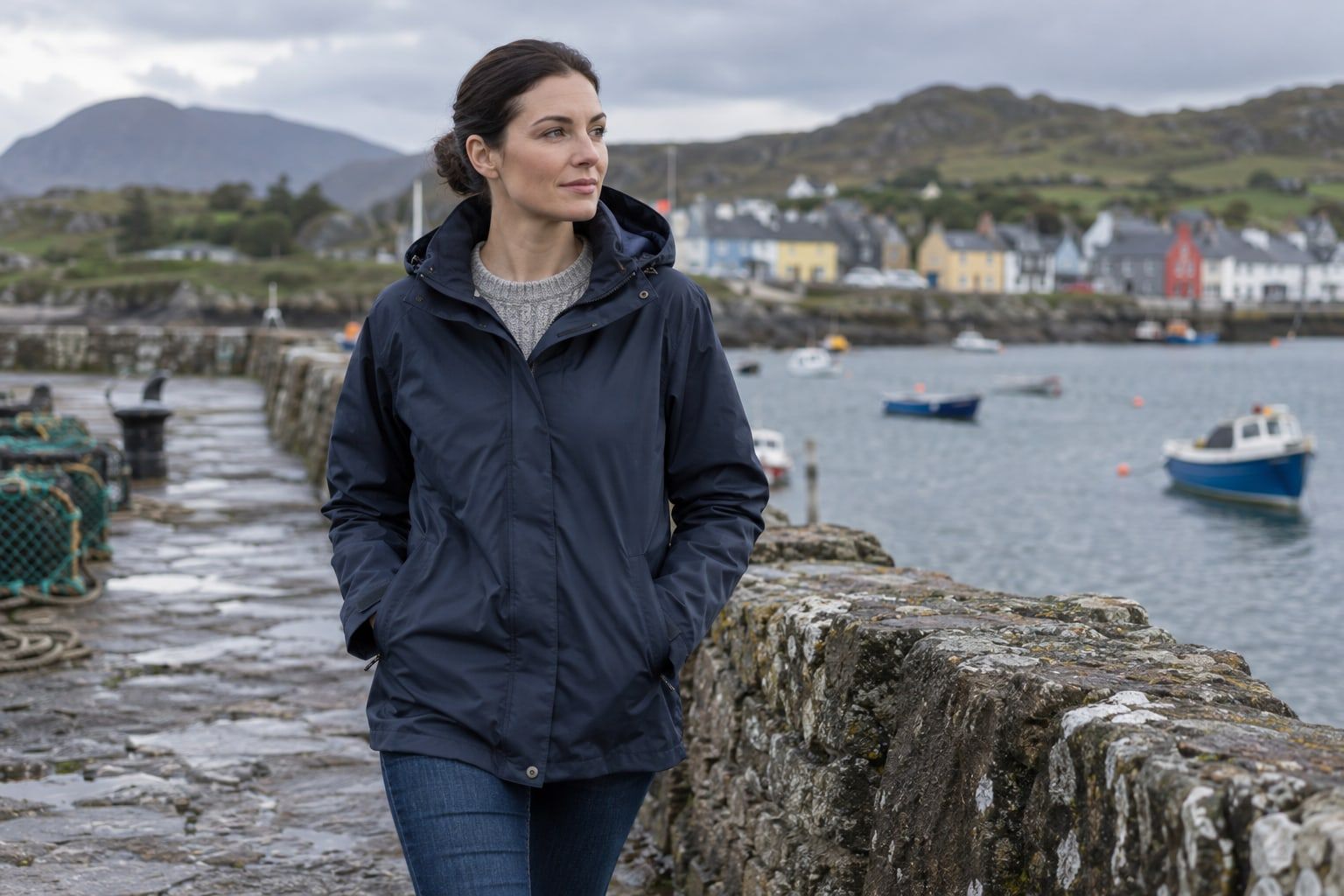
Irish weather is mild, damp and changeable. It rarely gets very cold, but it rains often, the wind can be relentless, and showers and sunshine can turn up within the same hour. That's why the best jacket for Ireland is usually not the warmest one, but the one that handles rain and wind while letting you adjust the warmth.
This guide works through the conditions you'll actually meet and the jacket types that suit each one.
Quick match: conditions and jackets
| Conditions | Best jacket type | Also works |
|---|---|---|
| Steady rain | Waterproof shell, fully taped | Insulated waterproof |
| Showers and sunshine | Breathable waterproof shell | Softshell (light showers only) |
| Strong wind | Waterproof or windproof shell | Softshell, waxed cotton |
| Mild, damp day | Light, breathable shell | Water-resistant trench |
| Dry cold snap | Puffer or wool overcoat | Fleece under a shell |
| Wet cold snap | Shell over a puffer or fleece | Insulated waterproof parka |
| West coast, exposed | 3-layer shell, good hood | Waxed cotton for farm work |
| City commuting | Breathable shell or trench | Insulated waterproof |
| In the car or bag | Packable 2.5-layer shell | Light water-resistant jacket |
Steady rain
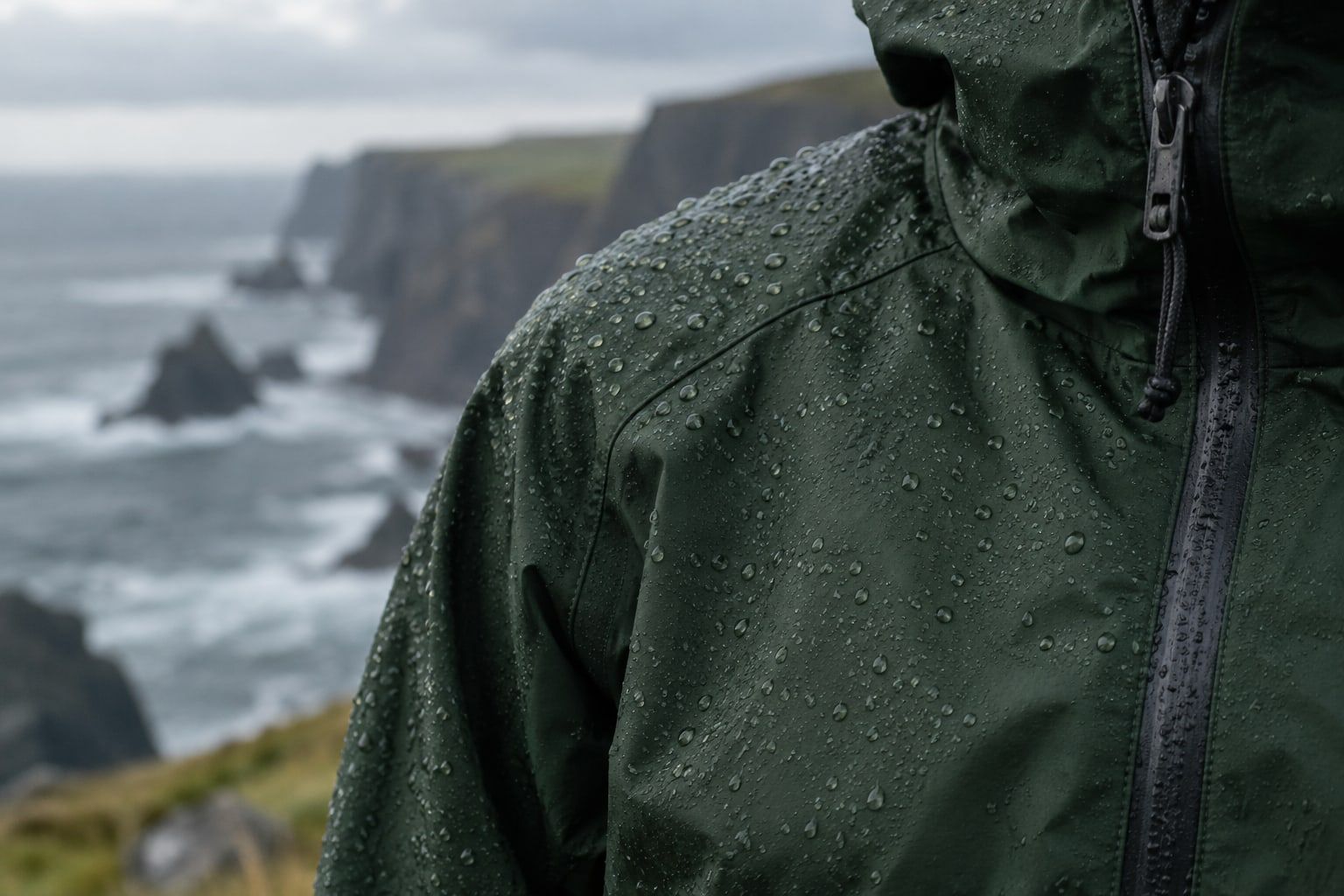
When it settles in for the day, only a fully waterproof jacket will do. That means a waterproof fabric or membrane, fully taped seams, a hood with a peak, and a storm flap or water-resistant zip on the front. A hydrostatic head of around 10,000mm is a sensible minimum for regular rain, with 20,000mm or more for long days out in heavy rain.
Length matters here. A jacket that ends at the waist channels water onto your trousers, while one that covers your backside keeps your top half and your hips dry. If you walk for more than half an hour in steady rain, consider waterproof trousers too. No jacket stops rain soaking your legs. Our guide on how to choose a waterproof jacket covers the ratings and features in detail.
Showers and sunshine
This is the most typically Irish weather, and the hardest to dress for. You'll be wet one minute and warm in the sun the next, so a jacket that traps heat will have you sweating by the time the next shower arrives.
A breathable waterproof shell is the answer. Look for pit zips so you can vent without unzipping the front, and a hood that rolls away or stows in the collar. Wear thin layers underneath that you can strip off and stuff in a bag. A softshell can cope with short, light showers on a breezy day, but if the showers are heavy, it will eventually soak through.
Wind
Wind is the part of Irish weather that people underestimate. A 10°C day with a stiff breeze off the sea feels far colder than 10°C and still, and wind drives rain into every gap in a jacket.
Any good waterproof shell is also windproof. The details that matter are the ones that seal gaps: adjustable cuffs, a hem drawcord, a hood that cinches around your face and a high collar that covers your chin. Softshells are often very wind-resistant and more breathable than waterproofs, which makes them good for dry, blowy walks. Fleece on its own is close to useless in wind, but excellent under a shell.
Mild, damp days
A "soft day" of fine drizzle, mist and 12°C is common in every season. It's damp enough to soak a cotton jacket slowly, but too mild for anything insulated. People often wear a heavy coat on these days and end up overheated and damp from the inside.
A light, breathable shell over a T-shirt or thin jumper is ideal. For town, a water-resistant trench or a wool coat copes well with drizzle and looks smarter. Leave the puffer at home: you'll boil in it, and the outer fabric will be wet anyway.
Cold snaps
Proper cold in Ireland usually means a few clear, frosty days in winter, or a raw, wet spell around 3 to 6°C with a cutting wind. The two need different approaches.
Dry cold
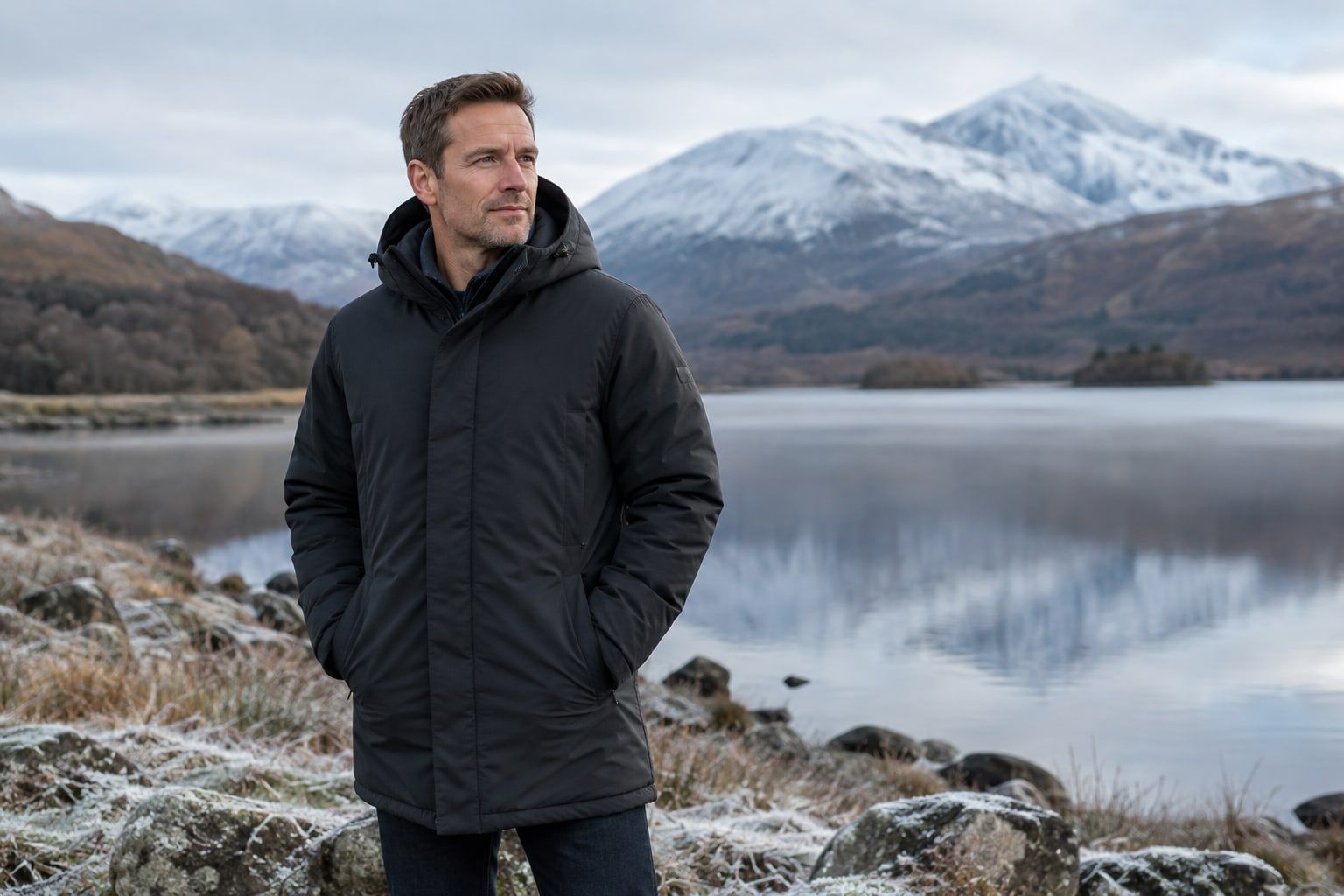
On still, clear days with frost in the morning, a puffer or a wool overcoat is perfect. Both are warm, and with no rain about you don't need waterproofing. A down puffer gives the most warmth for its weight.
Wet cold
Damp cold is more common and feels colder than the thermometer says. Here you need waterproofing and insulation together. Either wear a shell over a fleece or light synthetic puffer, or choose an insulated waterproof parka. Synthetic insulation keeps working when damp, which makes it a safer bet than down for Irish winters unless the down is under a waterproof shell. Our winter jacket buying guide goes into this choice.
The west versus the east
Met Éireann figures put the number of wet days at roughly 150 a year in the east and up to 225 in the west. Add stronger wind on the Atlantic coast, and a jacket that's perfectly adequate in Dublin can be overwhelmed on a walk around Achill or along the cliffs in Clare.
West of Ireland and coastal
If you live in Galway, Mayo, Kerry, Donegal or anywhere on the coast, buy for wind-driven rain. Look for fully taped seams, a higher hydrostatic head, a hood that seals well, and a jacket long enough to cover your backside. A 3-layer shell is worth the extra cost if you're out a lot. For farm work and dog walks across wet fields, waxed cotton is tough and handles brambles better than a lightweight shell.
East and the midlands
In Dublin, Kildare or Wexford, rain is less frequent and often lighter. A good 2-layer waterproof will handle most days, and softshells and water-resistant jackets get more use. That said, Dublin still has plenty of wet days, so a genuinely waterproof jacket remains the sensible core of the wardrobe.
City commuting versus the countryside
On foot, bus or Luas
City commuters spend a lot of time going from outdoor cold to indoor warmth. A breathable shell with layers underneath, or a lightly insulated waterproof, works better than a heavy parka you'll overheat in on a packed bus. Choose a jacket that looks smart enough for work, with a hood that rolls away and pockets that keep your phone dry.
Cycling
Cycling generates a lot of heat, even on cold mornings, so breathability matters more than insulation. Look for a waterproof with pit zips, a dropped back hem, a hood that fits over a helmet or stows away, and reflective details for winter mornings.
Countryside
In the countryside you're more likely to be out longer, further from shelter, and on muddy or overgrown ground. Prioritise a tough outer fabric, a long cut, and fully taped seams. Waxed cotton and heavier 3-layer shells both earn their place here. A dog walk on a dark January evening is also a good reason to choose a jacket with reflective trim or a bright colour.
The jacket that lives in the car or bag
The forecast will get it wrong. Everyone in Ireland eventually learns to keep a spare jacket somewhere handy.
A packable 2.5-layer shell is ideal for this. It's light, it squashes into its own pocket or a small stuff sack, and it's fully waterproof even if it isn't the most comfortable for long days. Keep one in the boot for the GAA match that turns wet, in your work bag for the walk home, or in your Ryanair carry-on for a weekend away. Make sure it has a hood and taped seams, because a "packable" jacket that only resists showers defeats the purpose. Browse lightweight jackets for options of this kind.
Layering for changeable days
The real secret to Irish weather is not one perfect jacket but a system you can adjust. Layering means wearing several thinner pieces instead of one thick one, so you can add or remove warmth as the day changes.
- Base layer: a T-shirt or long-sleeve top that moves sweat away from your skin. Merino or synthetic is better than cotton for active days, as cotton stays damp.
- Mid layer: the warmth. A fleece, a wool jumper or a light puffer. This is the piece you add or remove most often.
- Outer shell: the waterproof, windproof layer that protects everything else.
On a showery April day you might wear a base layer and shell, with a fleece in your bag. On a cold, wet day in February you wear all three. On a dry, crisp day you might ditch the shell entirely and wear a puffer over a base layer.
The one thing to get right is fit. Your shell needs enough room to go over your mid layer without pulling across the shoulders or riding up at the wrist. Our fit guide on room for layering shows how to check this before you buy.