Buying guide · Essentials
Buying a Jacket as a Christmas Gift

A good jacket gift fits the person's ordinary week. Think about the walk to the bus, the sidelines at a match or the coat they pull over work clothes. A warm jacket that is awkward to cycle in, or a beautiful coat they worry about getting wet, may spend Christmas in the wardrobe.
Before choosing one, find out what their current jacket gets wrong. Short sleeves, a hood that falls over their eyes and pockets too small for a phone are useful clues. If they are particular about fit, choosing together can be a better present than a surprise parcel.
Start with the jacket they actually wear
Choose a reference jacket that fits comfortably now, with the clothes they usually wear underneath. An old favourite that has become tight is a clue about style, but a poor template for size. Compare like with like: a fitted indoor blazer will not tell you how much room they want in a rain shell over a fleece.
Ask permission to borrow and measure it if that is practical. Otherwise, a quiet conversation about what they would change can tell you more than a hurried look at its size label. Note the labelled size and fit description, but treat them as supporting information rather than a universal conversion.
Measure it flat, without stretching
Fasten the jacket and lay it on a flat surface. Smooth out folds gently. Write down the units and exactly where each measurement starts and ends, so you can repeat the same method when comparing another garment.
- Chest width: measure straight across from underarm to underarm. Record this as a flat width, not a body chest measurement.
- Shoulders: if it has ordinary shoulder seams, measure across the back between them. A dropped shoulder or raglan sleeve needs a different comparison.
- Sleeves: record the seam-to-cuff length and the measuring method. Some charts measure from the centre back of the neck instead.
- Back length: measure from the base of the collar to the hem. This helps distinguish a short jacket from a coat that covers the seat.
- Hem width: compare the lower opening if they often find coats tight around the hips or over a jumper.
A flat chest width is not interchangeable with a size chart's body chest circumference. Even doubling it does not tell you which labelled size to buy, because a finished jacket includes room for movement and layers. Read whether the maker publishes body measurements or garment measurements; if it is unclear, ask before ordering. Our jacket measurement guide explains the body measurements used by many charts.
Do not add an arbitrary number of centimetres to every measurement. A reference jacket worn over a thick jumper already includes that room. Adding more automatically may leave the shoulders and sleeves too large.
Match the gift to their routine
Choose the job first, then the style. A person waiting beside a GAA pitch has different needs from someone walking briskly to work, even if both describe themselves as feeling the cold.
| Their usual outing | What to check on the jacket | A useful question |
|---|---|---|
| Bus stop, school run or dog walk | Hood adjustment, weather protection and accessible pockets | Can they close the hood without losing their view? |
| Standing at matches or outdoor events | Room for warm layers and coverage when sitting | Does the hem still cover them on a bench? |
| Active walks or hillwalking | Space for layers, freedom of movement and a weatherproof shell | Does it work with their existing fleece and pack? |
| Cycling to work | Reach to the bars, rear coverage and compatibility with their usual equipment | Can they try it in their riding position? |
| Office or occasion wear | Fit over a jacket or blazer, sleeve room and comfortable fastening | Will it close over their actual work clothes? |
Use these as fitting checks, rather than a shopping specification that every jacket must meet. A commuter who spends most of the journey indoors may value easy removal and a manageable packed size. Someone outside for long periods may prefer coverage and pockets they can use with gloves.
For hillwalking, a jacket is one part of the clothing system. The British Mountaineering Council's guidance on walking layers describes a base layer, insulating middle layer and weatherproof outer shell. Check what the recipient already owns before buying another layer that duplicates it.
Leave room for the layers they use
Try to reproduce the outfit the gift will cover: perhaps a shirt and fine jumper for the office, or a fleece for a winter walk. A jacket that closes over a T-shirt may become restrictive over those layers. Buying a size larger without checking the cut can solve the chest problem while creating long sleeves and loose shoulders.
The BMC advises adjusting layers as activity and conditions change. That supports choosing pieces that work together; it does not mean everyone needs a heavy insulated coat. Our winter jacket guide helps compare a single warm coat with separate layers.
If the person can try it on, ask them to fasten it, reach forward, raise their arms and sit down. Watch for pulling across the back, cuffs retreating too far and a hem that rides up. Use their usual bag too: straps can change how the shoulders feel. Our fit overview covers these checks in more detail.
Keep their preferences in the decision
Notice the colours, length and fastening they already choose. A hood may be essential for a walk across a wet car park, or something they dislike on a coat for work. A high collar can feel cosy to one person and irritating to another.
Ask about care as well as appearance. Check the garment's label for washing and drying requirements, and whether those suit their home. A coat that needs a drying method they cannot use creates an extra job each time it needs cleaning. Include the care information with the gift instead of promising that every jacket can be washed the same way.
If fit remains uncertain, give a note offering a jacket-shopping trip together. It keeps the choice personal without leaving them to arrange an exchange for something they would never have selected.
Check returns before buying early
A gift receipt helps, but it does not create an unlimited right to return an unwanted jacket. The CCPC explains refunds and returns: an in-store change-of-mind return normally depends on the business's policy. Faulty goods have separate consumer protections.
For most online goods bought from an EU business, the CCPC describes a 14-day cancellation period starting when the goods arrive, followed by another 14 days to send them back after cancellation. Exceptions and return costs can apply. Read the CCPC's online shopping guidance and check where the business is based; an Irish-looking web address alone does not establish that.
Before paying, save the terms and your order confirmation. Check these points for the exact purchase:
- The last date to request a return and the last date for it to reach the business.
- Whether the purchase date qualifies for an extended seasonal policy.
- Whether the recipient can exchange it themselves with a gift receipt.
- Whether a change-of-mind return gives a refund, exchange or credit, and who receives any refund.
- Whether sale items, removed tags or alterations affect the voluntary policy.
- Who pays return postage, where it must be sent and whether online orders can be returned in person.
Keep the original receipt as well as the gift receipt. Ask the recipient to try the jacket indoors with clean clothing and leave tags attached while deciding. Avoid personalisation or alterations until they are happy with the fit. This guide does not list delivery cutoffs or promise any business's Christmas return dates; check the current terms at checkout.
Consider caring for a favourite jacket first
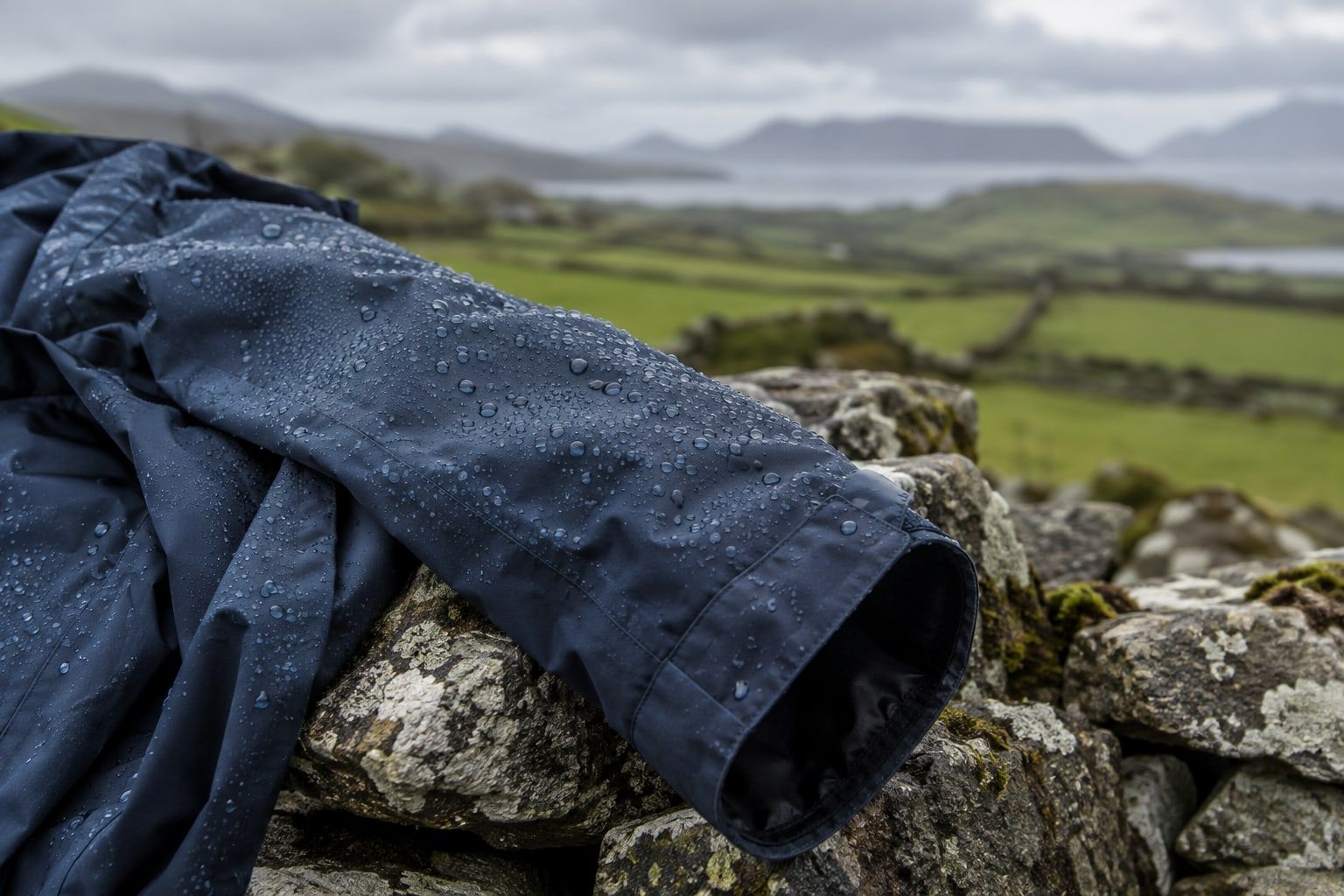
If they love their existing waterproof but rain no longer beads on it, ask whether they want help caring for it before buying a replacement. The fabric maker's DWR care guidance explains that the water-repellent surface finish can need restoration. Follow the specific garment instructions before using heat or a treatment; this guidance is not a reason to apply the same process to every fabric.
Our guide to whether waterproofing sprays work explains the distinction between restoring surface repellency and repairing damage. A proofer is not a repair for a broken zip, damaged membrane or leaking seam. Check what needs attention before turning a care product into a present.
Put these details in the gift bag
Include the gift receipt, the written return deadline and a short note offering to help with an exchange. Keep the order details somewhere you can find them. Give the recipient time to try the jacket over their own layers before they wear it outside.
That leaves them with a useful choice: keep a jacket that works, exchange the size or choose a different style while the return window is still open.
Source pages checked on 16 October 2026. Sizing and activity checklists are general editorial guidance, not a substitute for a garment's own chart or care label.