Buying guide · Style
Women's Jacket Style Guide
A good jacket does two jobs at once: it has to suit the weather and it has to suit you. In Ireland the first job is the harder one, since a single day can bring sunshine, a squall and a bitter wind off the sea. This guide covers the main styles, how each should fit, what to wear them with and how to put together a small outerwear wardrobe that works from January to December, at any age and for any shape.
The main styles
Trench coat
A trench is the classic spring and autumn coat: smart enough for work, relaxed enough with jeans. Look for tightly woven cotton gabardine, which resists light showers, or a modern version with a waterproof lining. Lengths run from just above the knee to mid-calf. Shorter trenches tend to suit petite frames, while longer ones look striking on taller women, but there's no hard rule. Tie the belt at your natural waist for shape, knot it loosely at the back for a relaxed line, or leave it open.
Irish weather: good for mild, showery days. Add a jumper underneath from October.
Wool coat
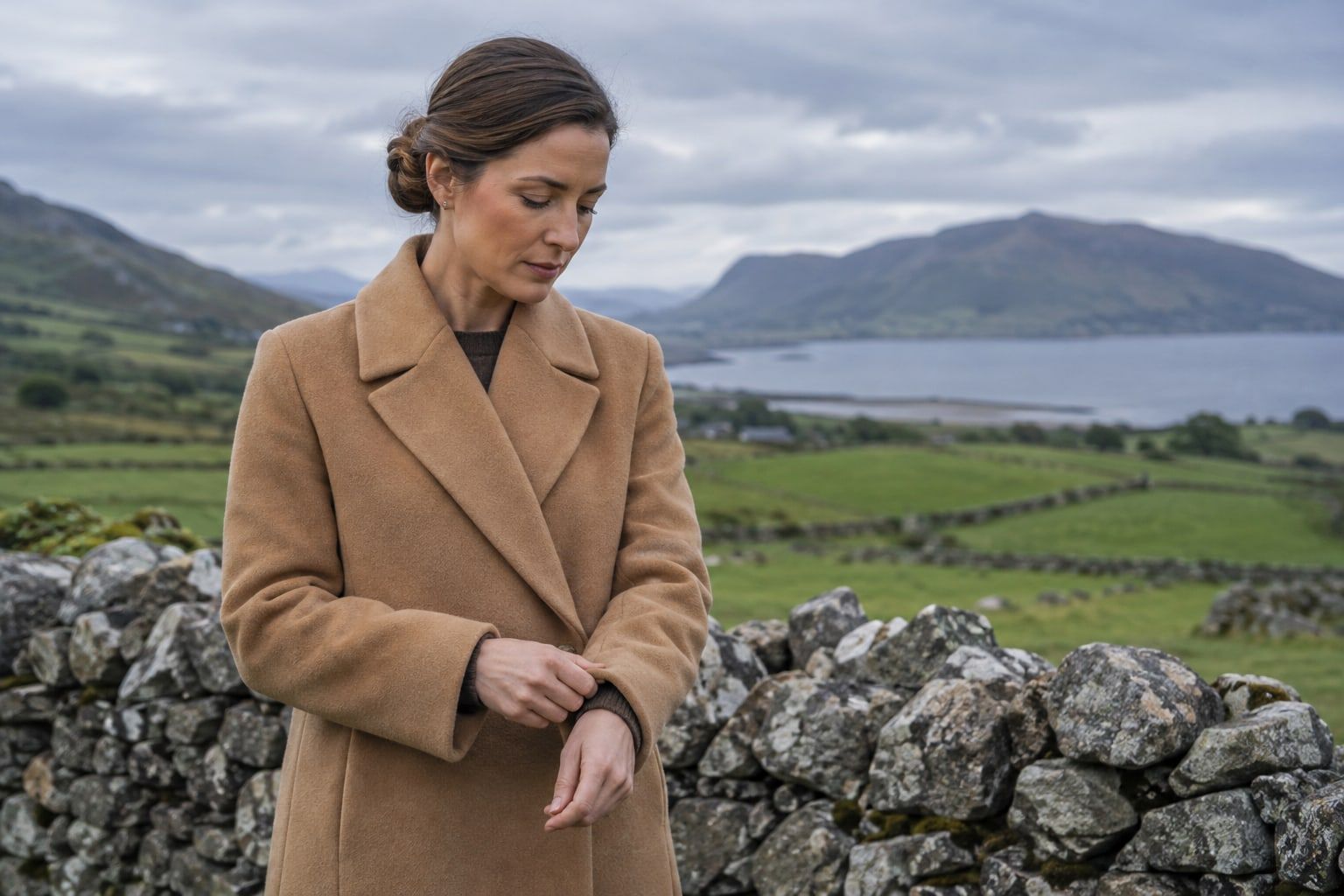
A well-cut wool coat is the most elegant piece in most wardrobes. Straight, wrap and double-breasted styles all work; a wrap coat with a tie belt is the most forgiving if your measurements vary between bust, waist and hips. Camel, navy, grey and black all go with almost everything. Look for a high wool content, since cheaper blends can bobble quickly.
Irish weather: warm and wind-resistant in cold, dry spells, but wool soaks up heavy rain. Pair it with a good umbrella or keep it for drier days.
Parka
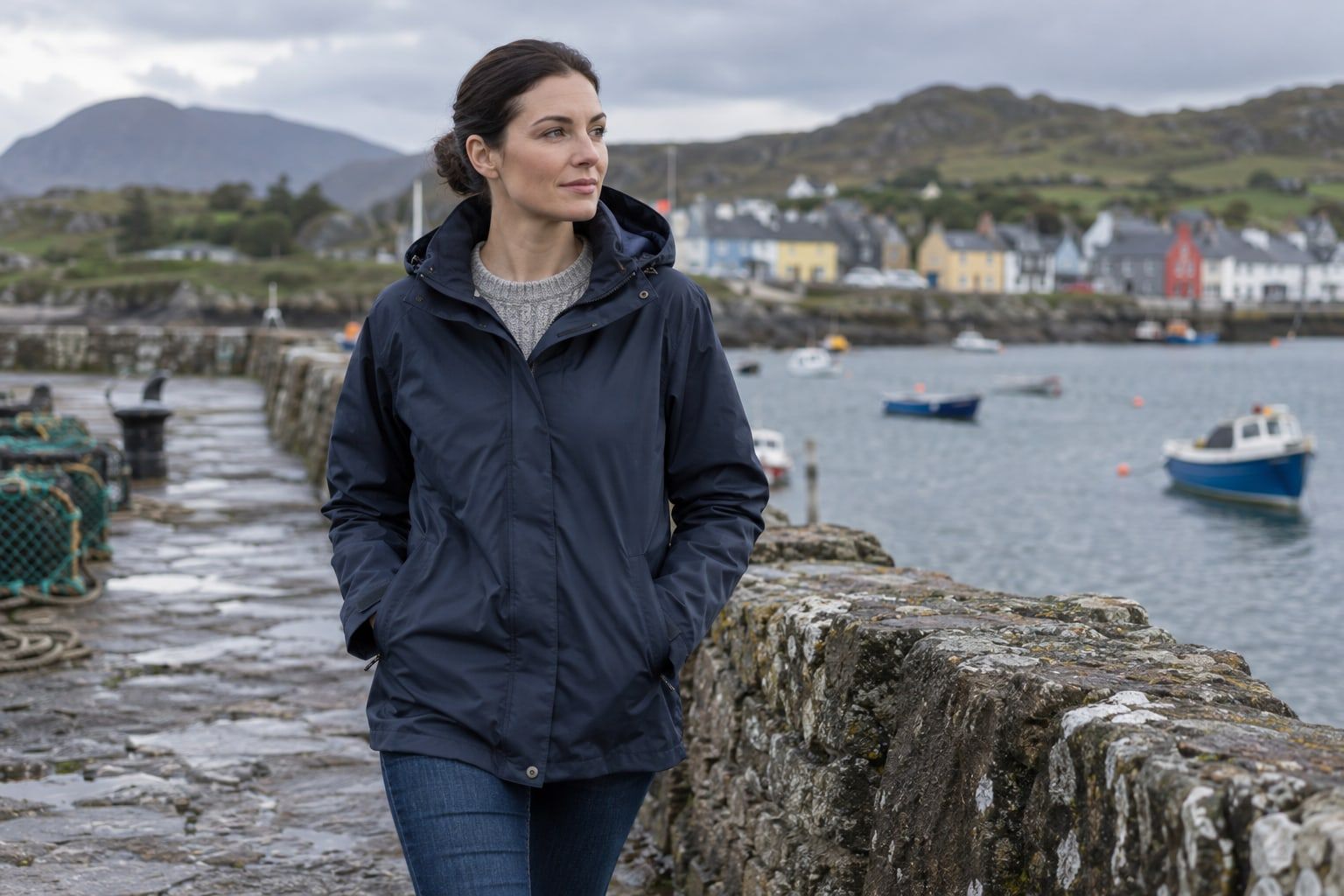
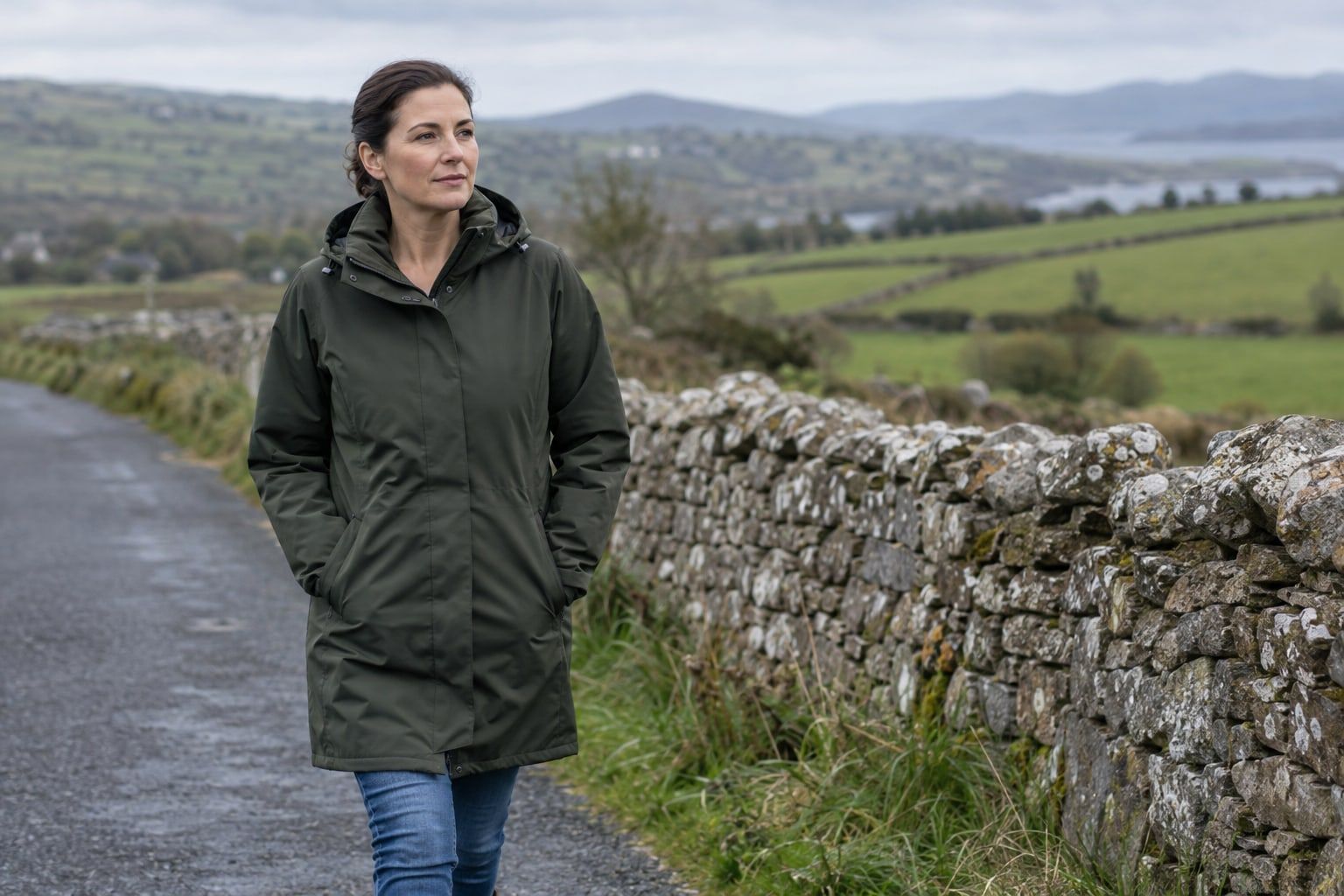
A parka can easily become the hardest-working jacket you own. It covers the seat or thighs, usually has a proper hood, and suits everything from the school run to a winter walk on Inch Beach. A waterproof parka with light insulation handles most of an Irish winter on its own. Look for a two-way zip so you can open it from the bottom when you sit or cycle, and a drawcord or waist tie if you prefer some shape.
Irish weather: excellent, provided it is genuinely waterproof. See how to choose a waterproof jacket for what the labels mean.
Puffer, including long puffers
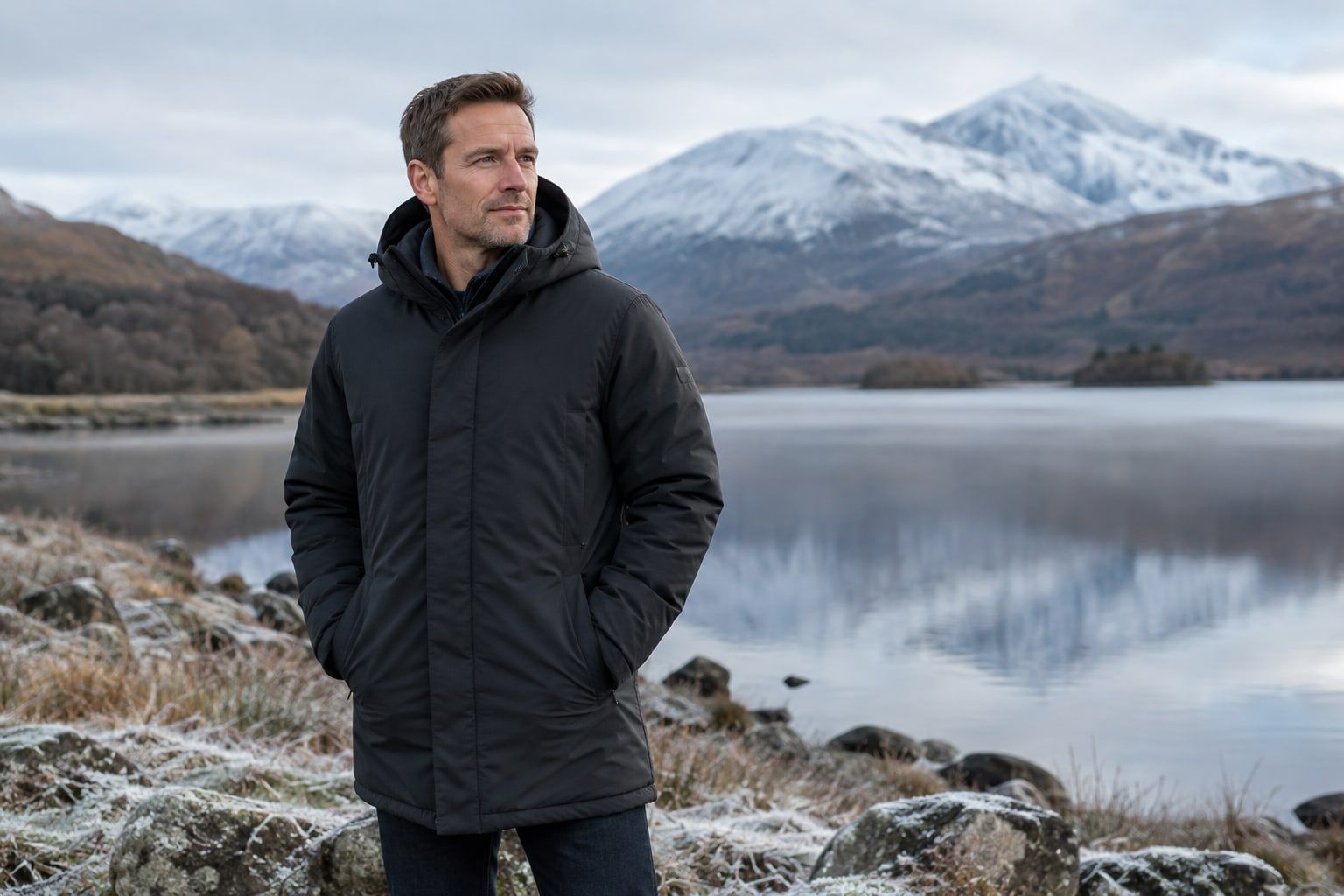
Short puffers look sporty and are easy to move in. Long puffers, reaching the knee or below, are like wearing a duvet: brilliant for standing on a sideline, waiting for a bus or walking the dog on a frosty morning. Horizontal baffles can add bulk, so if you prefer a streamlined look, choose narrower baffles, a matte fabric and a cinched waist or drawcord.
Irish weather: very warm, but down loses warmth when soaked. For damp days choose synthetic fill or a water-resistant shell, and read down vs synthetic jackets before you buy.
Rain jacket
A plain, well-cut rain jacket has become a style piece in its own right. City styles are often longer and neater, with hidden zips and a cleaner hood; outdoor shells are lighter and built for movement. Choose a length that covers your seat, or longer if you walk a lot in rain.
Irish weather: essential. If you own one jacket, make it this or a waterproof parka.
Quilted jacket
A quilted jacket is light, smart-casual and easy to wear over a jumper, a shirt or a dress. Diamond quilting looks classic; a collarless version looks neat over knitwear and under a scarf. Most are water-resistant rather than waterproof.
Irish weather: good for cool, dry or lightly damp spring and autumn days. Too light for midwinter on its own, but useful under a rain shell.
Leather and biker jackets
A leather or faux-leather biker jacket adds edge to dresses, jeans and knitwear, and suits every age when it fits well. It should be close through the shoulders and body, finishing at the waist or high hip, with sleeves ending at the wrist bone. Real leather moulds to your shape over time; faux leather is lighter and cheaper but less durable.
Irish weather: windproof and fine in a passing shower, but neither leather nor faux leather likes a soaking. A fair-weather piece.
Denim jacket
Easy, casual and wearable for decades. It works over summer dresses, under a wool coat in autumn, and with black or white jeans. A slightly relaxed cut is easier to layer than a very fitted one.
Irish weather: dry days only. Denim absorbs rain and takes a long time to dry.
Blazer-style jackets
A tailored or unstructured blazer bridges indoor and outdoor wear, and an oversized blazer can work as light outerwear on mild days. Fit at the shoulders is everything: the seam should sit at the edge of your shoulder, or slightly beyond on a deliberately oversized style.
Irish weather: an indoor layer, or an outer one only on warm, dry days. Under a trench or wool coat it's very practical for work.
Cropped jackets
Cropped jackets, finishing at or above the waist, look sharp with high-waisted trousers, wide-leg jeans and midi skirts. They draw the eye to your waist and can balance a fuller skirt or trouser.
Irish weather: leaves your lower back and hips exposed to wind and rain, so treat it as a fair-weather or indoor piece.
Teddy and fleece jackets
Teddy (sherpa) coats and fleece jackets are soft, warm and relaxed. A short fleece makes an excellent mid layer under a rain shell; a long teddy coat is a cosy weekend coat.
Irish weather: warm on cold, dry days but no protection from rain or a strong wind. Treat a fleece as a layer, not your main jacket.
Fit considerations
Most fit issues come down to six areas. For the full picture see how to choose a jacket that fits properly.
Shoulders
Check these first, because they're the hardest part to alter. On a structured coat, the seam should sit at the edge of your shoulder bone. If you have narrow shoulders and a fuller bust or hips, sizing up for the lower body often leaves the shoulders hanging; look for styles with raglan or dropped shoulders, or a wrap coat, which are more forgiving.
Bust
A jacket that pulls across the bust when buttoned is too small, even if it fits elsewhere. Look for darts or princess seams on tailored coats, and a little extra ease through the chest on parkas and puffers so the zip lies flat. Double-breasted coats need extra room here, since they overlap.
Waist shaping
Belts, drawcords and seamed waists give definition. If you prefer a straighter line, a single-breasted coat or a parka with no waist tie will hang cleanly. Neither is more flattering; it depends on the look you want and your comfort.
Length vs height
There's no rule that petite women can't wear long coats or tall women short ones. As a guide, check where the hem falls on your leg: just above or below the knee is usually the most balanced, while mid-calf works best when the coat has a clean line and you're wearing a slim boot or trouser. Many brands offer petite and tall ranges, which adjust sleeve and body length, not just overall size.
Sleeve length
Sleeves that cover your hand look borrowed; sleeves that end above your wrist look too small and let in the cold. Aim for the wrist bone on a tailored coat and slightly longer on outdoor jackets, so they still cover your wrists when you reach.
Room for knitwear
Try a winter coat on over the thickest jumper you'll wear with it. A coat that only fits over a blouse will spend most of the Irish winter in the wardrobe. More on this in how much room to leave for layering.
Layering through an Irish year
Irish weather is mild, damp and changeable, so layers beat one heavy coat.
- Spring (March to May): a trench, quilted jacket or light rain jacket over a jumper or shirt. Keep a packable rain jacket in your bag for April showers.
- Summer (June to August): a denim, linen or light cotton jacket for dry evenings, and a thin rain shell for everything else. A soft day in July can still be damp and cool, especially in the west.
- Autumn (September to November): this is trench, parka and quilted jacket season. A fleece or knit under a rain jacket covers most days.
- Winter (December to February): a waterproof parka or a synthetic puffer for daily wear, and a wool coat for drier days, work and evenings. Winter days are often 4 to 8°C and wet rather than freezing, so waterproofing matters more than maximum warmth.
Outfit pairings
With dresses
A belted trench or a wrap wool coat suits midi and maxi dresses well; let the coat be the same length as the dress or a little longer. A cropped leather or denim jacket works with shorter dresses and over summer dresses. With a long puffer, a knitted dress and boots make a warm, relaxed winter outfit.
With jeans
Almost everything works. A parka, quilted jacket or rain jacket with jeans and boots is the default Irish weekend outfit for good reason. For something smarter, try a camel wool coat with dark jeans and a plain jumper.
Workwear
A wool coat or trench over a suit or tailored trousers is the classic choice. If you walk or cycle to work, a long, plain city rain jacket in navy or black looks smart over office clothes and keeps them dry. Check that it fits over a blazer.
A wedding or occasion in bad weather
Irish weddings rarely come with a weather guarantee. A tailored wool coat or a cropped wool jacket over a dress keeps you warm between the church and the reception, and a smart trench works for spring and autumn weddings. Choose a neutral colour that won't clash with your outfit, or a shade that picks up one colour from it. A large umbrella will protect your hair and outfit far better than any hood.
Building a practical outerwear wardrobe
You don't need a lot of jackets, just the right ones.
- A waterproof everyday jacket or parka. This is the one you'll wear most often, so spend most of your budget here.
- A warm winter layer. A synthetic or treated-down puffer, long or short, for cold days, or a fleece or light puffer to wear under the waterproof.
- A smarter coat. A wool coat for winter, or a trench for spring and autumn, for work, evenings and occasions.
- Optional fair-weather pieces. A denim, leather or quilted jacket for dry days.
Neutral colours (navy, black, camel, olive, grey and stone) make every piece work with more of your clothes. If you love colour, put it in the rain jacket, where it's cheerful on a grey day and easy to spot in a car park, and keep the smarter coat neutral.
For help matching each type to particular conditions, see best types of jackets for Irish weather and browse our women's jackets.